
person
Nebuchadnezzar
נְבוּכַדְרֶאצַּר, נְבוּכַדְנֶצַּר
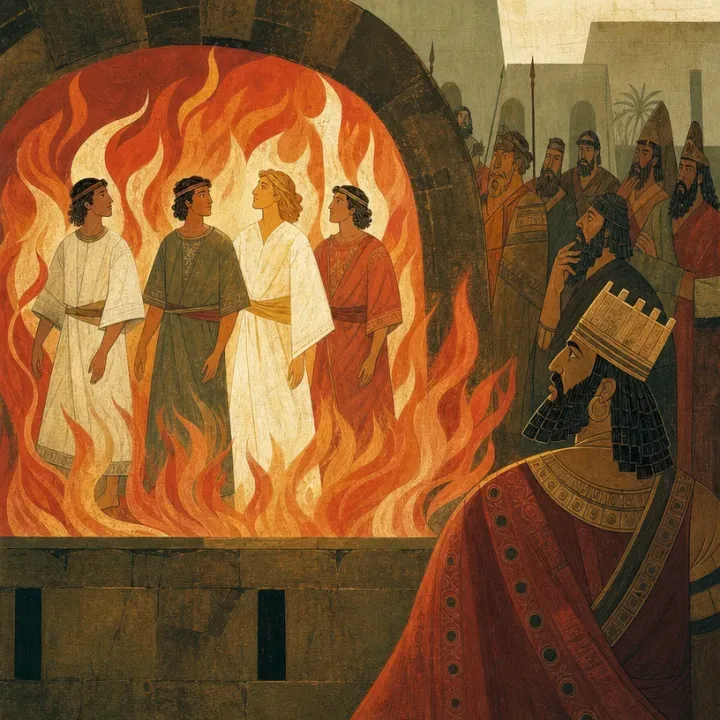
- verses
- 88
- first named
- 2 Kings 24:1
- last named
- Daniel 5:22
- period
- Divided Monarchy
- tribe
- Mesopotamia
Description
Who was Nebuchadnezzar?
Nebuchadnezzar II was the Emperor of the Neo-Babylonian Empire from 605-562 BC. He first invaded Judah during the reign of Jehoiakim, making the kingdom a vassal state (2Ki.24.1). When Judah later rebelled, Nebuchadnezzar besieged Jerusalem, deposed King Jehoiachin, and installed Zedekiah as a puppet king (2Ki.24.10-17). He also deported many Jews to Babylon, including the prophet Daniel (Dan.1.1-6).
When Zedekiah rebelled, Nebuchadnezzar destroyed Jerusalem and the temple, deporting most of the remaining population (2Ki.25.1-21). He appointed Gedaliah as governor over the remnant (2Ki.25.22-24). The biblical books of Jeremiah, Ezekiel, and Daniel contain extensive material about Nebuchadnezzar's reign and conquests. Daniel records Nebuchadnezzar's dreams, his temporary insanity, and his ultimate acknowledgment of God's sovereignty (Daniel 2-4).
Nebuchadnezzar also besieged the Phoenician city of Tyre (Ezk.26.7-14) and invaded Egypt (Jer.46.13-26). He is portrayed as God's instrument of judgment against the nations while also being condemned for his pride and idolatry (Jer.25.9; 50.17-18). His Babylonian name, Nabu-kudurri-usur, means "Nabu, protect my firstborn son.
Relations
Direct connections
Every entity the graph places in a stated relation with this one, grouped by the kind of link. Each relation is authored once and its inverse derived, so both ends always agree. Rows marked “registry” come from the identity spine rather than from a verse, and a row marked “which bearer is the source’s decision” is one where the name could have meant more than one person. The last group is not a relation at all — it counts the events two entities stand in together.
The 10 best-attested of 14 are drawn. All 14 are listed below.
Associated with
Father of
- BelshazzarregistryDaniel 5:2Daniel 5:11Daniel 5:18 +1
Stands in the same events as
- Babylon24 events
- LORD23 events
- Jerusalem22 events
- Daniel19 events
- Zedekiah19 events
- Jehoiachin12 events
- Chaldea9 events
- Riblah9 events
- Jehoiakim8 events
- Shadrach Meshach Abednego8 events
- Egypt6 events
- Tyre6 events
and 64 more, ordered by how many events they share.
Places
Where this happens
The places the claims about this person reach, drawn where the gazetteer locates them. A point is where a row puts them and never where tradition does; no line joins two points, because the rows state where and not in what order.
The pattern
Where Nebuchadnezzar is named
Every book of the corpus in the order it is read, each as wide as the chapters it holds. A bar is the verses of that book which write the name, and the flat stretches are as much of the answer as the bars.
88 verses across 9 of 66 books; 57 write the name nowhere. Named in 2 Kings (6), 1 Chronicles (1), 2 Chronicles (4), Ezra (5), Nehemiah (1), Esther (1), Jeremiah (37), Ezekiel (4) and Daniel (29).
Read it
Where to read it
Every verse of the text carried here that names this entity — 88, across 9 books. The name is written 91 times in them.
2 Kings6 verses
1 Chronicles1 verse
2 Chronicles4 verses
Ezra5 verses
Nehemiah1 verse
Esther1 verse
Jeremiah37 verses
21:221:722:2524:125:125:927:627:827:2028:328:1128:1429:129:329:2132:132:2834:135:1137:139:139:539:1143:1044:3046:246:1346:2649:2849:3050:1751:3452:452:1252:2852:2952:30
Ezekiel4 verses
Daniel29 verses
1:11:182:12:282:463:13:23:33:53:73:93:133:143:163:193:243:263:284:14:44:184:284:314:334:344:375:25:115:18
Onward
Where this page goes
Not the direct relations above — these are one hop further out, ranked so that a rare shared connection outweighs a common one.
Where they appear
Chapter by chapter
Atlas's reading of each chapter this person appears in, in canonical order. One line per chapter, and each leads to the whole of it.
- 2 Kings 24Nebuchadnezzar invaded, received Jehoiakim’s submission, besieged Jerusalem, took Jehoiachin captive, dismantled the temple gold, and set Zedekiah over Judah.
- 2 Kings 25Nebuchadnezzar marched against Jerusalem and appointed Gedaliah over the people left in Judah.
- 2 Chronicles 36Nebuchadnezzar bound Jehoiakim, carried the temple articles away, summoned Jehoiachin, and led survivors into exile.
- Ezra 1Nebuchadnezzar carries the articles from Jerusalem away and places them in the temple of his gods.
- Ezra 2Nebuchadnezzar carried the exiles away to Babylon as its king.
- Ezra 5Nebuchadnezzar destroyed the temple in Jerusalem and carried the people away to Babylon.
- Ezra 6Nebuchadnezzar took the gold and silver articles from the temple in Jerusalem and carried them to Babylon.
- Nehemiah 7Nebuchadnezzar carried the exiles away to Babylon.
26 more chapters, from Jeremiah 21 to Daniel 5
- Jeremiah 21Nebuchadnezzar king of Babylon waged war against the city and received those whom the LORD handed over.
- Jeremiah 22Nebuchadnezzar receives Coniah and his mother as captives.
- Jeremiah 24Nebuchadnezzar carries Jehoiachin and the skilled people of Jerusalem away to Babylon.
- Jeremiah 25Nebuchadnezzar king of Babylon was sent against Judah and the surrounding nations as the LORD’s servant.
- Jeremiah 27Nebuchadnezzar received authority over lands, nations, and even the beasts of the field.
- Jeremiah 28Nebuchadnezzar remained the king whom the nations and their beasts were made to serve.
- Jeremiah 29Nebuchadnezzar carried the exiles to Babylon and was to kill Ahab and Zedekiah before their eyes.
- Jeremiah 32Nebuchadnezzar was named as the king whose forces would capture Jerusalem.
- Jeremiah 34Nebuchadnezzar led the army fighting Jerusalem and was to capture Zedekiah before burning the city.
- Jeremiah 37Nebuchadnezzar made Zedekiah king of Judah.
- Jeremiah 39Nebuchadnezzar besieged Jerusalem, judged Zedekiah at Riblah, and ordered Jeremiah to be protected.
- Jeremiah 43Nebuchadnezzar was named as the king who would set his throne over Jeremiah’s buried stones and strike the land of Egypt.
- Jeremiah 44Nebuchadnezzar is named as the king of Babylon who received Zedekiah into his enemy’s hand.
- Jeremiah 46Nebuchadnezzar defeats Pharaoh Neco’s army at Carchemish and later comes against Egypt.
- Jeremiah 49Nebuchadnezzar king of Babylon devised the plan against Hazor.
- Jeremiah 50Nebuchadnezzar was named as the last lion to crush Israel’s bones.
- Jeremiah 51Nebuchadnezzar is named as the king who devoured Jerusalem and crushed it like an empty vessel.
- Jeremiah 52Nebuchadnezzar marched against Jerusalem, judged Zedekiah at Riblah, and carried the captives away.
- Ezekiel 26Nebuchadnezzar king of Babylon comes against Tyre with horses, chariots, cavalry, troops, siege works, battering rams, and axes.
- Ezekiel 29Nebuchadnezzar causes his army to labor strenuously against Tyre and is promised Egypt as the wages for that labor.
- Ezekiel 30Nebuchadnezzar brings his ruthless people against Egypt and receives the sword placed in his hand.
- Daniel 1Nebuchadnezzar besieges Jerusalem, carries off its king and sacred articles, and examines the young men for royal service.
- Daniel 2Nebuchadnezzar’s dream troubles his spirit, and he demands both the dream and its interpretation before rewarding or destroying the wise men.
- Daniel 3Nebuchadnezzar set up the golden statue, summoned the officials, threatened the three men, and later promoted them.
- Daniel 4Nebuchadnezzar summons the wise men, tells his dream, receives its interpretation, loses his kingdom among the beasts, and praises the King of heaven when his sanity and throne return.
- Daniel 5Nebuchadnezzar took the temple vessels from Jerusalem and was remembered as a king humbled from greatness.
Sources